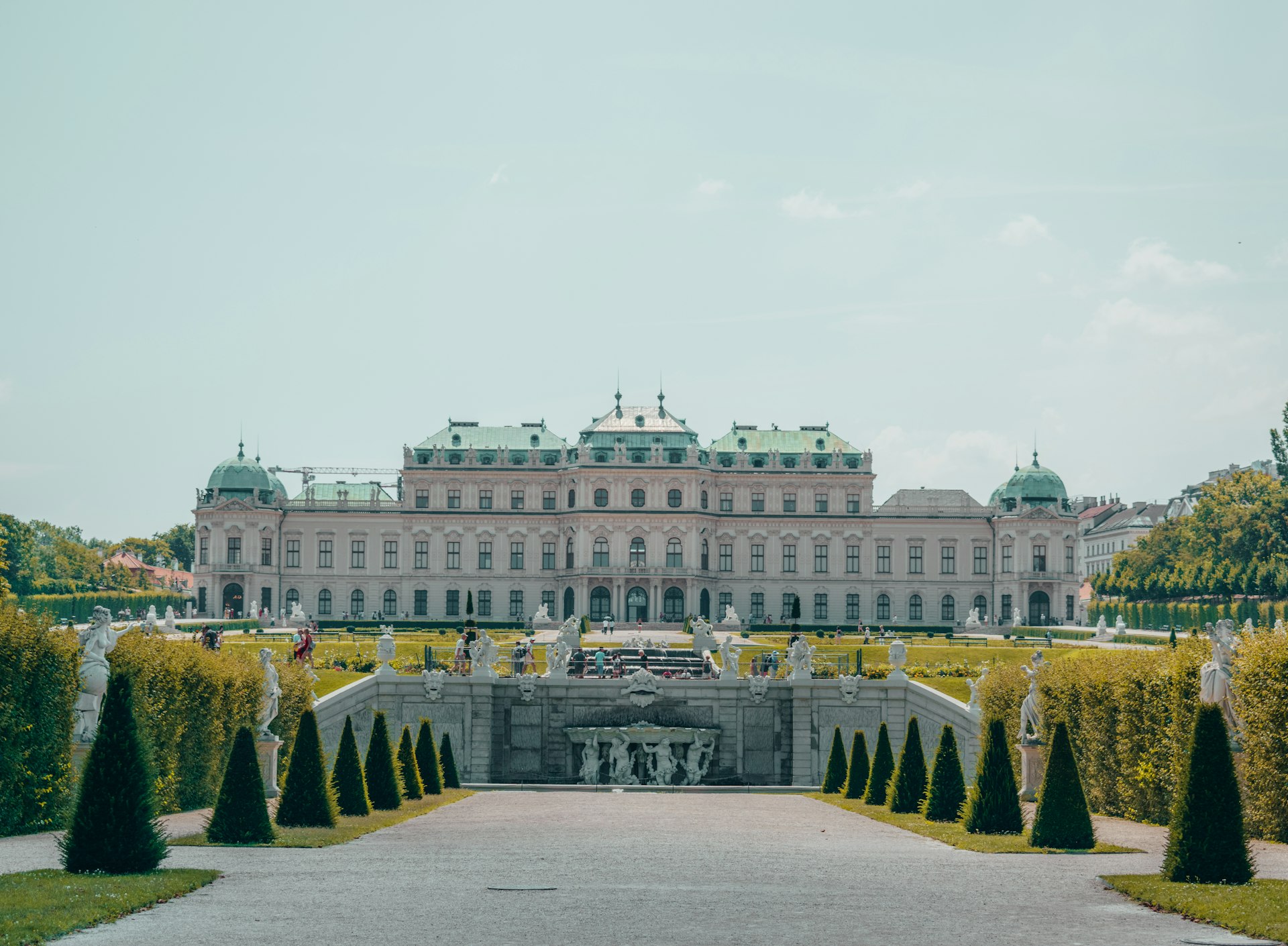
ImperialEscape
From the thermal baths and ruin bars of Budapest, through the grand palaces and coffeehouses of Vienna, to the medieval spires and cobblestone lanes of Prague — three imperial capitals, one magnificent journey.
Where You'll Go
Day-by-day highlights, insider tips, and local recommendations for each stop on your Habsburg journey
Budapest
Hungary
The "Pearl of the Danube" — one of Europe's most photogenic capitals, split by the river into hilly Buda and flat Pest. A city that blends Ottoman, Habsburg, and Art Nouveau architecture with world-class ruin bars and thermal baths.
Tour Highlights
- ✦Guided sightseeing with a Local Guide through the city's top landmarks
- ✦Heroes' Square — the iconic monument honoring the founders of Hungary
- ✦Fisherman's Bastion — fairytale-like neo-Romanesque terrace with panoramic views of Parliament
- ✦Matthias Coronation Church — 13th-century Gothic gem with stunning tiled roof
- ✦Welcome dinner on Day 1 and free afternoon on Day 2 to explore
Insider Tips
▸Optional: Danube dinner cruise — highly recommended for seeing the illuminated Parliament, Buda Castle, and bridges at night
▸The Great Market Hall (Nagycsarnok) is walking distance and worth a visit for paprika, salami, and lángos (fried dough)
▸Ruin bars in the Jewish Quarter (Szimpla Kert is the original) are a uniquely Budapest experience — perfect for evening exploring
▸Try a thermal bath: Széchenyi (grand and touristy) or Gellért (Art Nouveau elegance) are both excellent
▸Budapest is a world-class craft beer city. Look for Főzésde, MONYO, and Horizont at local tap houses near the Jewish Quarter
▸The Hungarian forint goes far — exchange a small amount at the airport for taxis and tips, but use cards widely
Vienna
Austria
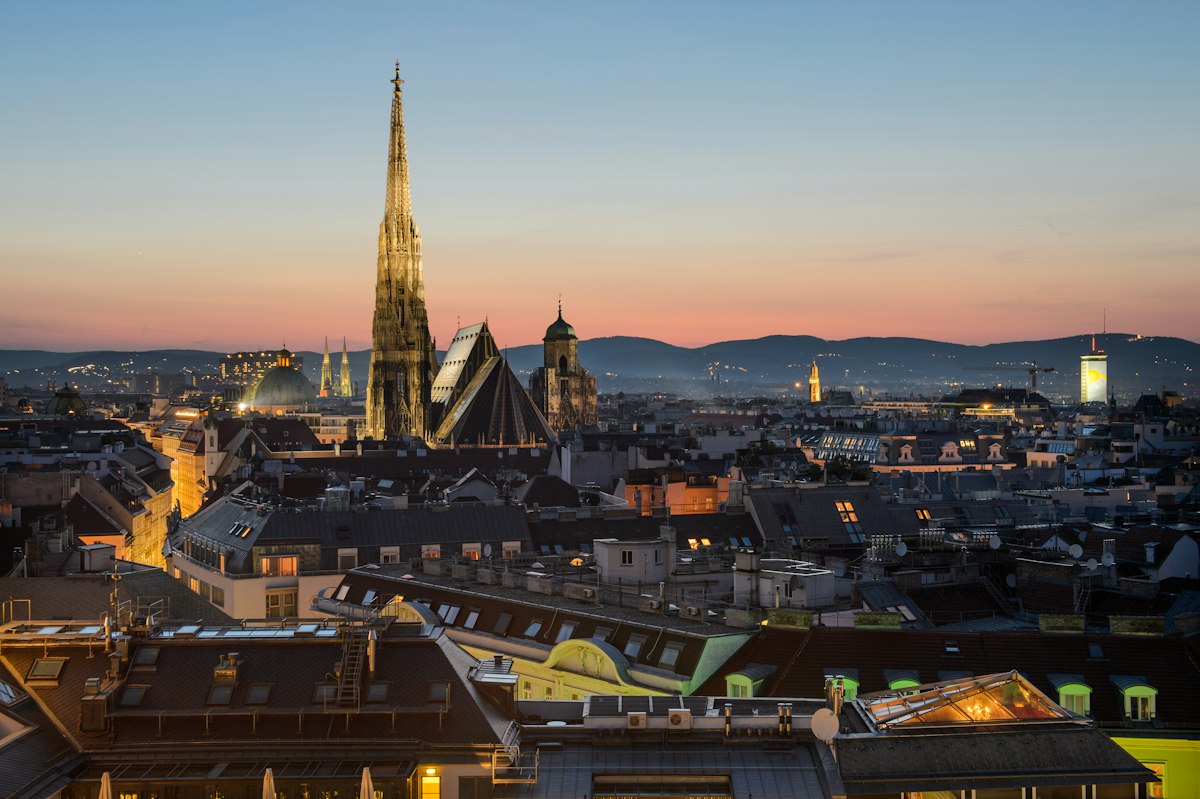
The City of Music — imperial capital of the Habsburg Empire for over 600 years. Vienna inspired Mozart, Beethoven, Strauss, Mahler, and Schubert, and today its grand palaces, coffeehouses, and museums remain among the finest in the world.
Tour Highlights
- ✦Scenic 174-mile (280 km) drive through the Hungarian and Austrian countryside
- ✦Guided sightseeing featuring Heldenplatz (Heroes' Square), framed by the Hofburg Palace wings
- ✦Visit St. Stephen's Cathedral — magnificent Gothic church with iconic diamond-patterned tiled roof
- ✦Full free day (Day 4) to explore world-class museums, palaces, and gardens at your own pace
Insider Tips
▸Schönbrunn Palace — the Habsburgs' summer residence with 1,441 rooms and spectacular gardens (allow 2-3 hours)
▸The Belvedere houses Klimt's "The Kiss" — one of the world's most famous paintings
▸For Wiener Schnitzel, Figlmüller (est. 1905) is the classic tourist pick; Gasthaus Pöschl is where locals go
▸The Naschmarkt (Vienna's famous open-air market) is great for lunch — mix of Turkish, Viennese, and Asian food stalls
▸Vienna's coffeehouse culture is UNESCO-recognized. Try Café Central (historic grandeur) or Café Sperl (more local feel)
▸Austrian wine is seriously underrated — look for Grüner Veltliner (crisp white) or Blaufränkisch (elegant red)
▸The Prater amusement park and its iconic Giant Ferris Wheel offer great views and a fun break from museums
▸Evening: consider the Wiener Staatsoper (State Opera) for a world-class performance — standing-room tickets can be very affordable
Prague
Czech Republic
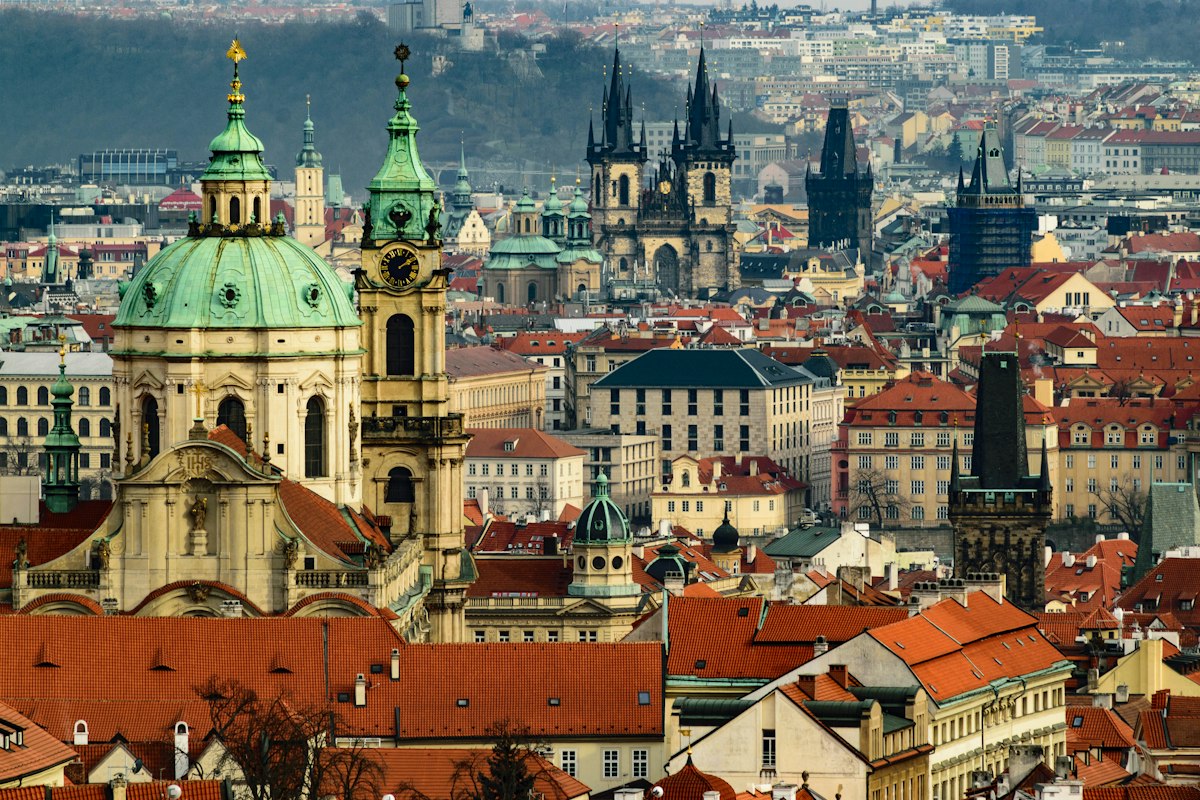
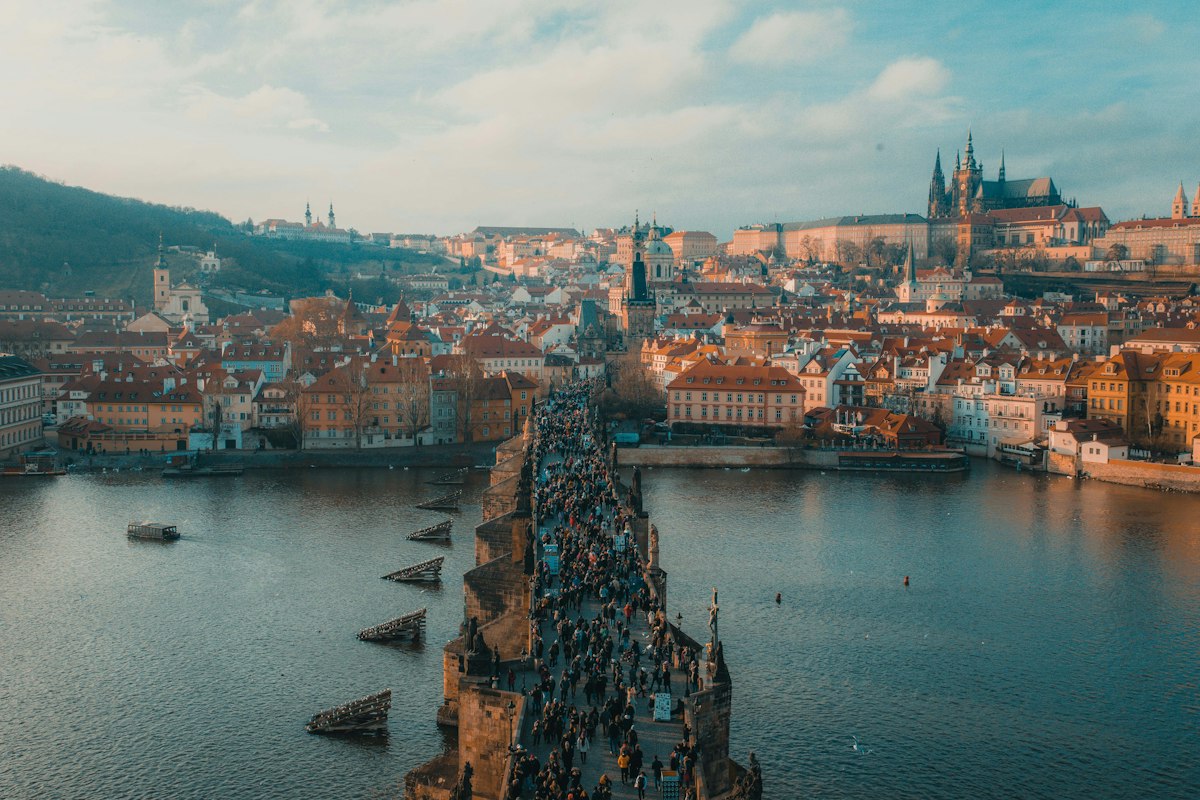
The "City of a Hundred Spires" and one of Europe's best-preserved medieval cities. Prague enchants with its castle complex, Gothic churches, colorful Baroque buildings, and one of the world's great beer cultures.
Tour Highlights
- ✦Scenic 193-mile (310 km) drive through the rolling Austrian and Czech countryside
- ✦Guided sightseeing through Prague's historic center with a Local Guide
- ✦Hradčany Castle grounds — the largest ancient castle complex in the world (over 1,000 years old)
- ✦Old Town Square — surrounded by Baroque buildings, Gothic churches, and colorful merchant houses
- ✦The Astronomical Clock (Orloj) — built in 1410, the 12 apostles parade through its windows every hour
- ✦Farewell dinner at a local Czech restaurant to celebrate the journey
Insider Tips
▸Optional: Guided evening walking tour of Prague's illuminated landmarks with Czech beer and music at a local tavern
▸Prague has one of the world's great beer cultures. Czech pilsners are the gold standard: try Pilsner Urquell, Staropramen, or microbrews at Zlatý Klas
▸Cross the Charles Bridge at dusk for magical views of the castle and Lesser Town, minus the daytime crowds
▸Trdelník (chimney cake) from street vendors is the classic Prague snack
▸Prague's Jewish Quarter (Josefov) is profoundly moving — the Old Jewish Cemetery and Spanish Synagogue are remarkable
▸For a last-night drink, try Hemingway Bar for craft cocktails or U Fleků for dark Czech lager brewed on-site since 1499
▸Pick up Bohemian crystal or marionette puppets as distinctive souvenirs
▸If your flight is later on Day 7, the Petrín Hill funicular and tower offer one last panoramic view of the city
7-Day Itinerary
Budapest → Vienna → Prague
Meals Included
Breakfasts
Dinners
Accommodations
Budapest
Courtyard by Marriott City Center • 10 min walk to Parliament
Vienna
Zeitgeist Hauptbahnhof • 300m from main train station
Prague
NH Prague • Anděl district
UNESCO World Heritage Sites
All three cities on this tour feature UNESCO-designated historic centers
Banks of the Danube, Buda Castle Quarter & Andrássy Avenue
Budapest's architectural ensemble spanning Roman ruins to Art Nouveau masterpieces, reflecting 2,000 years of urban development along the Danube.
Historic Centre of Vienna
The imperial core of the Habsburg Empire with its baroque palaces, medieval lanes, Ringstraße boulevard, and extraordinary concentration of musical and artistic heritage.
Historic Centre of Prague
One of Europe's most beautifully preserved medieval cities, featuring an unbroken sweep of Gothic, Renaissance, and Baroque architecture across 1,100 years.
Practical Information
Currencies
Hungary: Hungarian Forint (HUF) • Austria: Euro (€) • Czech Republic: Czech Koruna (CZK). Cards widely accepted in all three cities.
Power Adapters
Type C and F plugs (standard European two-pin round). You'll need an adapter from US outlets.
Languages
Hungarian, German, and Czech respectively. English is widely spoken in tourist areas and hotels.
Tipping
Hungary: 10-15% at restaurants • Austria: round up or 5-10% • Czech Republic: 10-15%. Tour guide and driver gratuities are not included.
Weather (Low Season)
November-March: expect 30-45°F (-1 to 7°C). Pack warm layers, waterproof jacket, and sturdy walking shoes for cobblestones.
Getting Around
All three cities have excellent public transit (metro, trams, buses). Walking is the best way to experience the historic centers.
Book Your Imperial Escape
7 days through three of Central Europe's most captivating capitals.
Starting at $1,099 per person
Low-season travel means smaller crowds, better prices, and a more authentic experience. Multiple departure dates available.